
Furnace Linings & Heat Treatment
Refractory Linings and Thermal Insulation for Industrial Furnaces
Furnace and heat-treatment linings must contain process heat, protect the steel casing and remain stable through repeated heating and cooling. The VITCAS range includes dense and insulating fire bricks, refractory castables, plastic mouldables, high-temperature mortars, zircon coatings, ceramic fibre blankets, rigid boards and compressed modules. These materials support new construction, relining, local repairs and thermal-efficiency upgrades in industrial furnaces, kilns, heat-treatment ovens and workshop equipment. Selection depends on the operating temperature, furnace atmosphere, heat flux, thermal cycling, mechanical loading, abrasion, chemical contact and required cold-face temperature. A published material limit is not a complete lining specification and must not be treated as the normal process set point without an appropriate design margin.
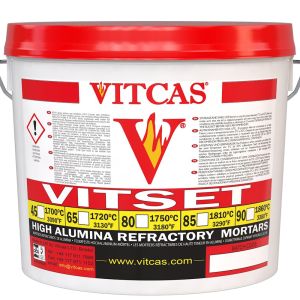 Mortier Réfractaire Pré Mélangé Vitset 85Prix Spécial 101,40 € 84,50 € Prix normal 140,40 € 117,00 €
Le mortier réfractaire Vitcas – Vitcas 85 a une forte teneur en alumine, il est pré mélangé et résiste à des températures maximales de 1810°C/3290°C.
En savoir plusRenseignez-vous sur ce produit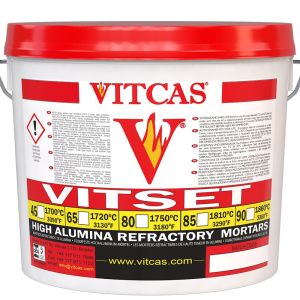 Mortier réfractaire haute alumine 1860°C - Vitset 90Prix Spécial 109,19 € 90,99 € Prix normal 154,44 € 128,70 €
Vitset 90 est un mortier réfractaire haute alumine prêt à l'emploi, reconnu pour son exceptionnelle résistance thermique et sa stabilité jusqu'à 1860°C. Idéal pour des applications industrielles telles que la pose d'éléments préfabriqués et de plaques à coulisse, ce mortier à prise à l'air offre praticité et fiabilité dans des environnements thermiques exigeants.
En savoir plus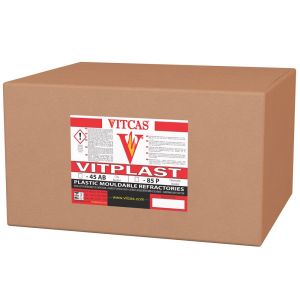 Plastique réfractaire modelable 1600°C - Vitplast 45ABPrix Spécial 54,60 € 45,50 € Prix normal 70,20 € 58,50 €
Vitcas Plastique réfractaire modelable – Vitplast 45AB. Il résiste à des températures élevées ne dépassant pas 1600°C. Ce plastique réfractaire modelable présente une prise exceptionnellement rapide et est idéal pour des applications telles que la réparation des rigoles et des poches de coulée dans les fonderies, ainsi que pour la réparation des portes et des revêtements de chaudières.
En savoir plus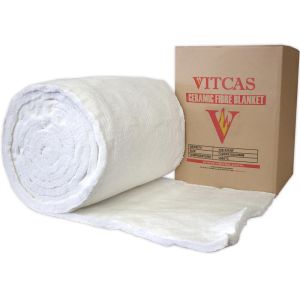 Couverture en fibres de céramique 1260°C85,80 € 71,50 € Prix normal 124,80 € 104,00 €
La couverture en fibres céramiques VITCAS résiste à une température de service maximale de 1260°C (2300°F), avec une densité de 128kg/m³. Disponible en épaisseurs de 13 mm, 25 mm et 50 mm, il est largement utilisé dans les industries telles que la pétrochimie, l'acier et la céramique. Il est idéal pour les applications d'isolation et de revêtement de fours.
En savoir plus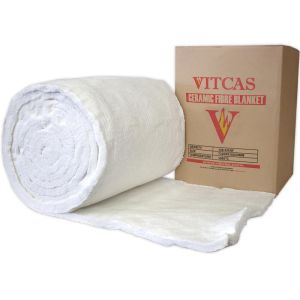 Couverture en fibres de céramique 1430°C117,00 € 97,50 € Prix normal 170,04 € 141,70 €
Couverture en fibre céramique VITCAS. Résistant à 1430°C. Densité de 128kg/m3. Disponible en 13 mm, 25 mm et 50 mm d'épaisseur. Peut être utilisée dans les fours à céramique et pour la cuisson du grès, pour la fabrication de porcelaine ou de porcelaine d'os, pour l'isolation contre les tensions, la protection contre les incendies et la production d'énergie.
En savoir plus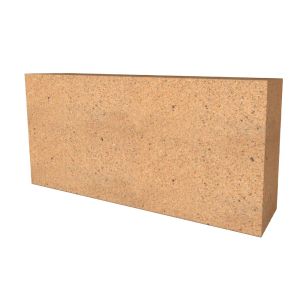 Briques Réfractaires VITCAS 230x114x76mmPrix Spécial 3,90 € 3,25 € Prix normal 6,23 € 5,19 €
Briques Réfractaires VITCAS 230x114x76mm. Briques Réfractaires en Argile avec 42% d’Alumine. Dimensions : 230x114x76mm. Température de fonctionnement maximale jusqu’à 1430°C. Pour revêtement de fours, céramiques, moulages de métal, forges et foyers de brasage.
En savoir plus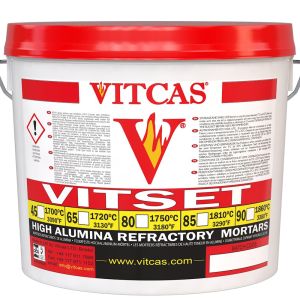 Vitset 45-Mortier réfractaire pré-mélangé 1700°CÀ partir de 23,39 € 19,49 € Prix normal 46,79 € 38,99 €
Vitset 45 est un mortier réfractaire polyvalent prêt à l'emploi, conçu pour résister à des températures allant jusqu'à 1700°C. Idéal pour le rejointoiement, les réparations et la pose de divers types de briques réfractaires et isolantes de haute qualité classées au-dessus de 1400°C. Convient également à l'utilisation avec des panneaux et des matelas en fibre céramique, offrant une solution pratique aussi bien pour les réparations que pour les nouvelles installations dans des environnements à haute température.
En savoir plus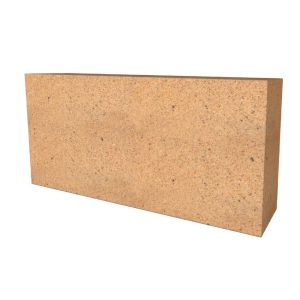 VITCAS Briques Réfractaires 60% AL2O3Prix Spécial 5,46 € 4,55 € Prix normal 7,80 € 6,50 €
Briques réfractaires VITCAS avec 60% d'Alumine Taille de Brique de 230 x 114 x 64mm. Il résiste à des températures maximales de 1600°C. Pour utiliser avec les garnitures de four, les céramiques, la fonte de métal, les forges et les foyers.
En savoir plus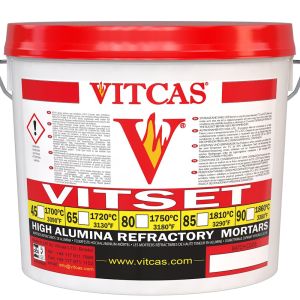 Mortier réfractaire haute température 1750°C - Vitset 80Prix Spécial 85,80 € 71,50 € Prix normal 124,80 € 104,00 €
Le Mortier Réfractaire Vitcas - Vitset 80 est un ciment pré mélangé, prêt à l’usage, à forte teneur en alumine, résistant à la chaleur. Il prend à l’air et est compatible avec la prise, le trempage, le revêtement et la pulvérisation sur des briques réfractaires. Il peut être utilisé dans différentes industries telles que l’industrie de l’acier et dans les fonderies.
En savoir plus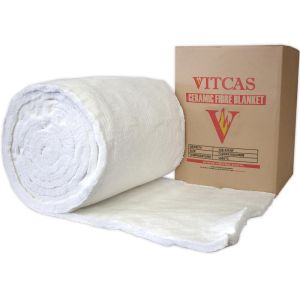 Couverture en fibres céramiques 1260°C - au mètre15,59 € 12,99 € Prix normal 24,95 € 20,79 €
La couverture isolante en fibres céramiques VITCAS offre une faible conductivité thermique et une grande résistance à la traction, supportant des températures allant jusqu'à 1260 ºC. Disponible au mètre, elle est disponible en 13 mm et 25 mm d'épaisseur, 610 mm de large, avec une densité de 128 kg/m³, idéal pour l'isolation à haute température.
En savoir plus VITPLAST 85P – Lié ChimiquementPrix Spécial 93,59 € 77,99 € Prix normal 101,40 € 84,50 €
Masse à damer Malléable Liée Chimiquement Vitcas - Vitplast 85P. La masse à damer malléable a une forte teneur en alumine et peut supporter des températures atteignant 1700°C / 3100°F. Elle est utilisée dans des applications de couverture et dans les becs de fours électriques à induction.
En savoir plusRenseignez-vous sur ce produit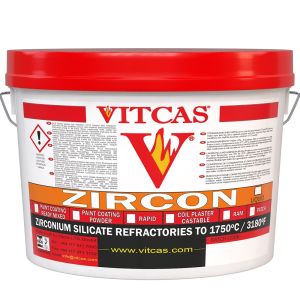 Poudre d’enduit de Doublure en Zircon 1750°CPrix Spécial 77,99 € 64,99 € Prix normal 109,20 € 91,00 €
L’enduit de Doublure en Zircon Vitcas est fourni sous forme de poudre sèche à mixer avec de l’eau ou déjà mixé. L’enduit pour doublure en zircon est résistant à des températures allant jusqu’à 1750oC / 3182oF. Il peut être utilisé dans de nombreuses applications industrielles y compris l’industrie de l’aluminium, dans les doublures en silicates d’aluminium, etc.
En savoir plus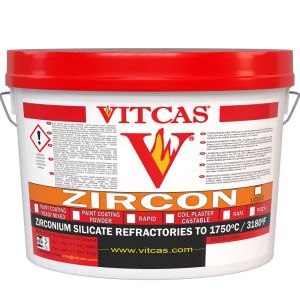 Revêtement réfractaire au zircon 1750°CPrix Spécial 62,39 € 51,99 € Prix normal 109,19 € 90,99 €
Vitcas Revêtement réfractaire au zircon présente une consistance crémeuse, permettant une application directe au pinceau. Pour une application par pulvérisation, il doit être dilué avec de l'eau. Résistant jusqu'à 1750°C, il est destiné à la protection des fours, poches de coulée, revêtements en fibre céramique et autres surfaces réfractaires en contact avec des alliages métalliques fondus et du verre.
En savoir plus Béton réfractaire 1600°CPrix Spécial 62,39 € 51,99 € Prix normal 70,19 € 58,49 €
Le béton réfractaire est utilisé pour les réparations de garnissages de chaudières, de portes de chaudières et de revêtements d'incinérateurs. Il est destiné aux applications où des températures localisées plus élevées sont rencontrées, par exemple dans les blocs de brûleurs à gaz ou à mazout, ainsi que dans les zones utilisant de l'air forcé.
En savoir plus Béton réfractaire 1700°CPrix Spécial 73,31 € 61,09 € Prix normal 77,99 € 64,99 €
Vitcas Béton réfractaire 1700 est idéal pour des applications industrielles ainsi que pour des projets de fonderie domestique, notamment pour le garnissage de fûts métalliques afin de créer un petit four creuset. Grâce à sa capacité à résister à des températures allant jusqu'à 1700°C, il est même adapté à la fusion de la fonte, garantissant d'excellentes performances et une grande durabilité dans les environnements à haute température.
En savoir plus Béton réfractaire isolant 1300°CPrix Spécial 46,79 € 38,99 € Prix normal 62,39 € 51,99 €
Vitcas Béton réfractaire isolant est un matériau à faible densité, destiné au garnissage des fours et utilisé comme couche d'isolation pour les bétons réfractaires denses. Il est résistant à des températures allant jusqu'à 1300°C.
En savoir plus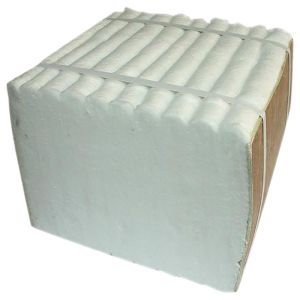 Module en fibre céramique -1430°C
Les modules de fibres céramiques sont généralement constitués de plusieurs couches de matériau de couverture en fibres céramiques qui sont empilées et comprimées dans une forme modulaire rigide. Les avantages des modules de fibres céramiques sont notamment leur résistance aux températures élevées, leur faible conductivité thermique et leur excellente résistance aux chocs thermiques. Ils sont également légers et faciles à installer, ce qui en fait un choix populaire pour de nombreuses applications à haute température.
En savoir plusRenseignez-vous sur ce produit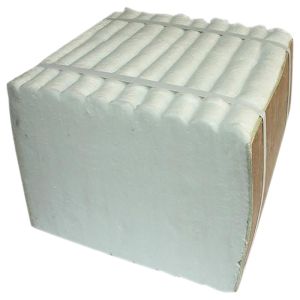 Module en fibre céramique -1260°C
Les modules de fibres céramiques sont des produits d'isolation fabriqués à partir de fibres céramiques qui sont formées en modules pour être utilisées dans des applications à haute température. Ils sont couramment utilisés dans les fours industriels, les fours et les chaudières, ainsi que dans les installations de production d'énergie et de traitement chimique.
En savoir plusRenseignez-vous sur ce produit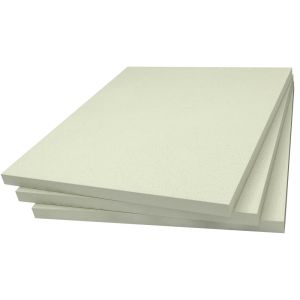 Plaque isolante en fibre céramique 1430°C – VITCASÀ partir de 117,00 € 97,50 € Prix normal 149,75 € 124,79 €
La plaque isolante en fibre céramique VITCAS est résistante jusqu'à 1430°C. Dimensions : 1200 x 1000 x 25 mm et 1200 x 1000 x 50 mm. Grâce à sa haute résistance thermique et à sa faible masse thermique, les cycles de chauffe et de refroidissement sont plus rapides, ce qui la rend idéale pour le thermoformage du verre et les fours céramiques.
En savoir plus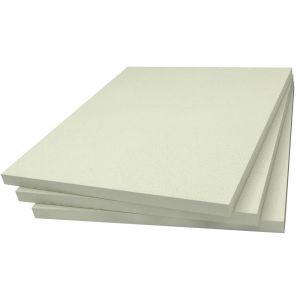 Plaque isolante en fibre céramique 1260°C – VITCASÀ partir de 85,80 € 71,50 € Prix normal 124,79 € 103,99 €
Plaque isolante en fibre céramique VITCAS. Résistante jusqu'à 1260°C. Dimensions : 1200 x 1000 x 25 mm et 1200 x 1000 x 50 mm. Présente une faible conductivité thermique à haute température et une excellente résistance aux vitesses de gaz élevées, ce qui la rend idéale pour l'isolation de conduits de chaudières, le garnissage de fours dans l'industrie du verre et de la céramique, ainsi que pour le revêtement de cheminées.
En savoir plus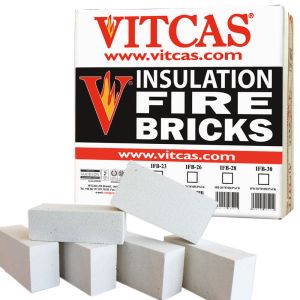 Briques isolantes réfractaires 1260°C – VITCAS Grade 23Prix Spécial 3,59 € 2,99 € Prix normal 9,35 € 7,79 €
Briques Réfractaires Isolantes Vitcas – Grade 23. Elles sont résistantes aux hautes températures jusqu’à 1260°C/2600°F. Dimensions : 230x114x76mm. Idéales dans les situations où il n’est pas nécessaire de garder la chaleur, comme pour isoler des réfractaires, fours à céramiques, fourneaux, conduits et autres équipement industriels exposés à de hautes températures.
En savoir plus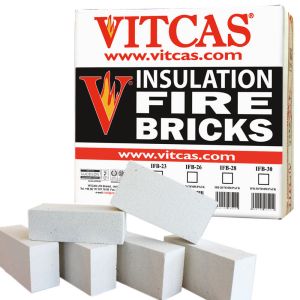 Briques isolantes réfractaires – 1430°C – VITCAS Grade 26Prix Spécial 4,36 € 3,63 € Prix normal 10,91 € 9,09 €
Briques isolantes réfractaires VITCAS – Grade 26. Résistantes jusqu'à 1430°C. Dimensions : 230 x 114 x 76 mm. Les briques isolantes peuvent être utilisées dans de nombreuses applications industrielles à haute température, telles que les gazogènes, les fours, les fours de traitement thermique et les fours de détente.
En savoir plus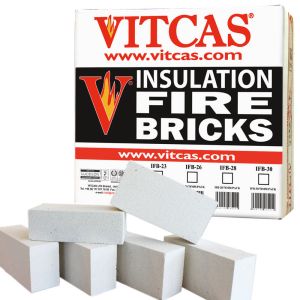 Briques Réfractaires Isolantes VITCAS Grade 28 -1530°CPrix Spécial 5,93 € 4,94 € Prix normal 12,47 € 10,39 €
Briques Réfractaires Isolantes Vitcas Grade 28. Dimensions : 230x114x76mm. Elles résistent jusqu’à 1530°C/ 2800°F. Les briques réfractaires isolantes sont légères et peuvent être utilisées pour diverses applications industrielles telles que les revêtements de fours et fourneaux à céramique, et dans les zones qui ne sont pas en contact direct avec des matériaux en fusion, etc.
En savoir plus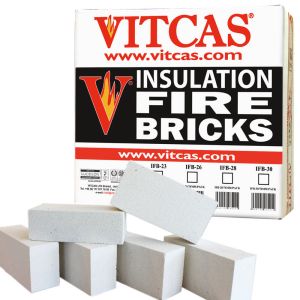 Briques Réfractaires Isolantes -VITCAS Grade 30 -1650°CPrix Spécial 7,64 € 6,37 € Prix normal 15,53 € 12,94 €
Briques Réfractaires Isolantes – Grade 30. Dimensions : 230x114x76mm. Elles ont une résistance de 1650°C/ 3000°F. Les briques réfractaires isolantes sont légères et peuvent avoir des applications industrielles comme dans les fourneaux à air chaud, en tant que recouvrement primaire, pour une isolation supplémentaire de fours ou fourneaux, et pour l’isolation de conduits.
En savoir plus
Furnace Lining Systems for Controlled Thermal Processing
Heat-treatment furnaces are used for processes such as annealing, normalising, hardening, tempering, stress relieving and controlled heating before forming or fabrication. Kilns and process furnaces may also be used for firing ceramics, calcining, melting, holding or other high-temperature duties. Each process creates a different combination of temperature, atmosphere, heat flux, mechanical wear and thermal cycling.
A lining should therefore be designed as a system rather than selected from one headline temperature. The hot face must withstand the process environment, while the insulation behind it limits heat loss and helps control the casing temperature. Mortars, joints, anchors, coatings, penetrations and door seals must remain compatible with both layers. The furnace shell, supports, burners, heating elements and control system remain separate engineering considerations.
How the Main Lining Components Work
| Lining component | Primary function | Important selection factors |
|---|---|---|
| Dense fire brick or dense castable | Forms a durable hot face exposed to heat, flame, load and process contact | Maximum service temperature, atmosphere, abrasion, erosion, chemical attack, load and thermal shock |
| Insulating fire brick or insulating castable | Reduces heat transfer while providing a shaped or load-bearing refractory layer | Thermal conductivity, compressive duty, shrinkage, hot-face suitability and backup position |
| Fibre blanket, board or module | Provides low-mass insulation for rapid thermal response and reduced stored heat | Temperature grade, shrinkage, gas velocity, anchoring, surface protection and fibre-control requirements |
| Refractory mortar | Sets compatible bricks or precast shapes and closes designed joints | Brick chemistry, joint thickness, setting mechanism, service temperature and furnace atmosphere |
| Plastic mouldable refractory | Rams or moulds into local repairs and difficult geometries | Bond system, installation method, working time, compaction, wear and heat-up procedure |
| Refractory coating | Provides a selected surface finish or interface against process contact | Substrate compatibility, surface preparation, atmosphere, chemical contact and coating thickness |
Dense Refractories for Hot-Face Construction and Repair
Dense refractories provide mechanical strength and resistance to direct process exposure. They generally store and conduct more heat than lightweight insulation, so they are used where durability, impact resistance, abrasion resistance or load capacity is required. They should not automatically be described as insulation.
| Material | Published temperature limit | Typical role in a furnace system |
|---|---|---|
| 42% Alumina Fire Bricks | 1430°C | Dense brick hot faces for kilns, furnaces, forges and brazing hearths |
| 60% Alumina Refractory Fire Bricks | 1600°C | Higher-temperature dense brickwork for demanding hot-face construction |
| Refractory Castable Grade 1600 | 1600°C | Monolithic linings and repairs, including burner blocks and high-local-temperature areas |
| Refractory Castable Grade 1700 | 1700°C | Dense furnace and crucible-furnace linings requiring high-temperature and wear resistance |
| VITPLAST 45AB Plastic Mouldable | 1600°C | Rapid-setting local repairs to furnace, boiler, launder and door linings |
| VITPLAST 85P Chemically Bonded Mouldable | 1700°C | High-alumina mouldable refractory for specialised repairs and induction-furnace components |
Choose between dense refractory bricks, refractory castables and plastic mouldable refractories according to geometry, installation access, jointing, expected wear and shutdown time. Castable and mouldable products require the specified preparation, placement, curing, drying and first heat-up procedure.
High-Temperature Insulation and Low-Thermal-Mass Linings
Insulating materials reduce heat flow and stored energy but differ significantly in strength, rigidity and resistance to gas velocity. A soft blanket that is effective behind a protected hot face may be unsuitable where it is exposed to impact, abrasion or a high-velocity burner stream. A rigid board or compressed module can provide greater dimensional control, while insulating bricks and castables provide a more robust refractory structure.
| Insulation family | Available grades | Selection consideration |
|---|---|---|
| Biosoluble Fibre Blanket | 1200°C | Flexible, low-mass thermal insulation where the product grade and exposure are suitable |
| Ceramic Fibre Blanket | 1260°C and 1430°C | Flexible furnace and kiln insulation; protect against unsuitable abrasion and gas velocity |
| Ceramic Fibre Board | 1260°C and 1430°C | Rigid low-conductivity panels for lining, baffles, ducts and accurately formed insulation |
| Ceramic Fibre Modules | 1260°C and 1430°C | Compressed modular linings for industrial furnaces and kilns; anchoring and installation pattern are design-critical |
| Grade 23 Insulating Fire Bricks | 1260°C | Lightweight brick insulation for furnaces, kilns, flues and other refractory structures |
| Grade 26 Insulating Fire Bricks | 1430°C | Higher-temperature insulating brickwork, including heat-treatment and stress-relieving furnaces |
| Grade 28 Insulating Fire Bricks | 1530°C | Lightweight lining for higher-temperature kilns and furnaces, away from unsuitable molten-material contact |
| Grade 30 Insulating Fire Bricks | 1650°C | High-temperature primary or backup insulation where the mechanical and chemical duty permits |
| Insulating Refractory Castable | 1300°C | Low-density monolithic lining or insulation backing behind a compatible dense castable |
Temperature grade alone does not determine insulation thickness or external surface temperature. The complete heat-transfer calculation should include the hot-face material, insulation layers, joints, anchors, casing, ambient conditions and acceptable heat loss. Use the material thermal-conductivity data at the relevant mean temperature, not a room-temperature value.
Refractory Mortars and Zircon Surface Coatings
A refractory mortar should be compatible with the brick or shape being installed. Excessively thick joints, incorrect drying or an incompatible chemistry can create weak planes or local movement. VITCAS refractory mortars include ready-mixed air-setting grades for different temperature and alumina requirements.
| Product | Limit stated in the current product description | Primary use |
|---|---|---|
| Vitset 45 | 1700°C | Setting, trowelling and patching compatible refractory and insulating bricks |
| Vitset 80 | 1750°C | High-alumina brick setting, dipping, coating or spraying in industrial refractory work |
| Vitset 85 | 1810°C | High-alumina mortar for specialised high-temperature refractory assemblies |
| Vitset 90 | 1860°C | High-purity mortar for specialised shapes, nozzles, plates and severe industrial duties |
| Ready-Mixed Zircon Coating | 1750°C | Zircon-based surface coating for compatible furnace, ladle, fibre and refractory substrates |
| Dry-Powder Zircon Coating | 1750°C | Water-mixed zircon coating for compatible refractory and aluminosilicate monolithic linings |
Published limits are selection references rather than a complete engineering specification. Confirm the latest technical data sheet, chemical compatibility and installation instructions before using any value in a formal furnace design or safety-critical specification.
Selecting Materials for the Furnace Duty
Operating Temperature and Design Margin
The chamber set point, local flame temperature and actual refractory temperature are not identical. Burner zones, heating elements, furnace crowns, door reveals and penetrations can experience higher heat flux or local temperature than the nominal chamber reading. Select materials against the calculated or measured lining temperature and apply the margin required by the equipment designer, process variability and relevant technical data. Do not run a material continuously at a published maximum merely because the chamber controller displays a lower average value.
Atmosphere and Chemical Contact
Oxidising, reducing, carburising and other controlled atmospheres can affect refractory and metal components differently. Process vapours, fluxes, ash, slags, molten metals and glass can penetrate or react with a lining. Record the chemical species, concentration, temperature and contact mechanism. A material suitable in clean air may not be suitable where liquid penetration, alkali attack, sulphur compounds or molten process media are present.
Mechanical Wear and Structural Load
Charge movement, hearth traffic, baskets, trays, tools and cleaning can damage a lightweight insulating surface. Use a dense or otherwise protected hot face where impact, abrasion or erosion is expected. Insulating fibre products should not carry structural loads unless the specific product and fixing system are designed for them. Brickwork, cast sections and anchors must accommodate their own weight and the expansion of adjacent components.
Thermal Cycling and Heat Capacity
Low-mass fibre systems can shorten heat-up and cool-down times and reduce stored energy, which is valuable for frequently cycled batch furnaces. Dense brick or castable linings provide greater robustness but store more heat. The best arrangement depends on cycle frequency, process stability, door opening, production throughput and the consequences of rapid temperature change.
Burners, Elements and Gas Velocity
Do not place an unprotected low-density material in a high-velocity flame or gas stream unless its technical data permits the duty. Burner quarls, ports and high-wear zones may require dense castable or shaped refractory. Maintain the clearances specified for electrical heating elements and prevent conductive anchors or supports from creating unwanted heat paths or electrical hazards.
Installation, Drying and First Heat-Up
Successful refractory installation depends on workmanship as well as material selection. Store dry products in suitable conditions, use clean equipment and measure water additions accurately. Install bricks with the specified joint thickness and bond pattern. Mix, place and compact castables within their working time, avoiding unapproved extra water. Fit fibre systems with the specified compression, joints, overlaps and anchors.
New castables, mortars and coatings contain water that must be removed under a controlled schedule. Heating a damp monolithic lining too quickly can generate internal steam pressure, cracking or disruptive spalling. Drying and first heat-up rates depend on material, thickness, geometry, ambient curing, ventilation and furnace design. Follow the current product instructions and the furnace engineer's approved dry-out schedule; do not substitute a generic timetable.
- Before heat-up: verify curing, vents, expansion allowances, anchors, joints and the condition of burners, elements and controls.
- During commissioning: monitor the specified temperatures at representative locations and hold or reduce the rate if the approved schedule requires it.
- After commissioning: record the cycle, inspect the lining after safe cooling and investigate abnormal cracks, movement or hot spots.
Inspection, Maintenance and Safe Access
Routine inspection should identify open joints, displaced bricks, eroded hot-face material, exposed anchors, fibre shrinkage, damaged modules, coating loss and changes in external shell temperature. A new hot spot can indicate thinning, a gap or failed insulation even when the furnace still reaches its set point. Trend observations and thermographic data under comparable operating conditions rather than relying on a single reading.
Furnace entry and intrusive maintenance require an appropriate safe system of work. Isolate and secure every relevant energy source, allow adequate cooling, assess the atmosphere and determine whether confined-space controls apply. Review labels and safety data sheets before cutting, mixing, removing or installing refractory products. Control dust at source and select suitable respiratory, eye, skin and thermal protection from the task-specific risk assessment.
Ceramic fibre, biosoluble fibre and cementitious refractory products must be handled according to their own safety information; similar appearance does not mean identical hazard classification. Used fibre or refractory can also be contaminated by the process. Assess the removed material before disturbance and disposal.
Frequently Asked Questions
What is the best material for lining a heat-treatment furnace?
There is no universal best material. Selection depends on operating and local lining temperatures, atmosphere, cycling, abrasion, load, required thermal response and acceptable heat loss. Many furnaces combine a durable hot face with one or more insulation layers.
What is the difference between dense and insulating fire bricks?
Dense fire bricks prioritise mechanical strength and resistance to direct process exposure but have greater mass and generally higher thermal conductivity. Insulating fire bricks are lighter and reduce heat transfer but are less suitable for severe impact, abrasion or incompatible molten-material contact.
Should I use fire bricks or refractory castable?
Brick linings provide controlled units, joints and straightforward local replacement. Castables create monolithic shapes around complex geometry and penetrations but require controlled mixing, placement, curing and dry-out. Many industrial linings use both.
Does a higher temperature rating always mean a better refractory?
No. A higher limit does not automatically provide better insulation, thermal-shock resistance, chemical compatibility, abrasion resistance or economy. Specify the properties required for the actual exposure.
Is the furnace set-point temperature the same as the lining temperature?
Not necessarily. Local heat flux, burners, elements, door openings and sensor position can produce lining temperatures different from the chamber set point. Base the design on representative worst-case conditions rather than one controller reading.
How much temperature margin should a furnace lining have?
The margin must be set by the furnace or process designer using the measured or calculated material temperature, process variability, local hot spots, atmosphere and the manufacturer's data. A fixed universal margin is not appropriate for every furnace.
Can ceramic fibre blanket be used as the exposed hot face?
Only where the selected grade, anchoring and surface condition are suitable for the temperature, gas velocity, abrasion and process atmosphere. A blanket used successfully as protected backup insulation may fail rapidly in a direct burner stream or mechanically exposed zone.
What is the difference between ceramic fibre blanket, board and modules?
Blanket is flexible and suited to wrapping, backup layers and formed insulation. Board is rigid and provides controlled thickness and shape. Modules are compressed assemblies designed for modular furnace linings. Each requires its own joint and fixing method.
Can biosoluble blanket replace ceramic fibre blanket?
Only after checking temperature, shrinkage, atmosphere, mechanical exposure and the complete safety data for the intended duty. Materials with similar appearance or thermal conductivity are not automatically interchangeable.
How do I calculate the required insulation thickness?
Use a multilayer heat-transfer calculation with thermal conductivity at the relevant temperatures, layer thicknesses, contact resistances, casing conditions and ambient heat transfer. Confirm the result against the allowable shell temperature and energy target.
Why must refractory castable be dried before full-temperature operation?
Castable contains installation water. If it is heated too quickly, steam pressure can develop inside the lining and cause cracking or disruptive spalling. Follow the product-specific curing and approved dry-out schedule.
Can ordinary cement or building mortar be used in a furnace?
No. General construction materials are not substitutes for a refractory selected for the operating temperature and environment. Use a compatible refractory mortar or castable and follow its stated installation limitations.
Which mortar should be used with insulating fire bricks?
Match the mortar to the brick grade, chemistry, service temperature and specified joint thickness. The mortar should not become the lower-temperature or chemically incompatible part of the lining.
What is zircon refractory coating used for?
It provides a zircon-based surface layer on compatible furnace, ladle, fibre or refractory substrates. Its suitability depends on substrate preparation, coating thickness, process chemistry and the stated field of use; it does not compensate for an unsuitable base lining.
Are small cracks in a refractory lining normal?
Some shrinkage or expansion cracking can occur, especially in monolithic linings, but appearance alone does not establish acceptability. Assess crack width, depth, location, movement, exposed anchors, hot spots and the lining designer's acceptance criteria.
When should a furnace lining be repaired or replaced?
Investigate increasing shell temperature, deep or widening cracks, open joints, displaced bricks, loss of section, exposed anchors, fibre shrinkage, contamination or repeated local failure. Repair decisions should consider the remaining thickness and failure consequence, not appearance alone.